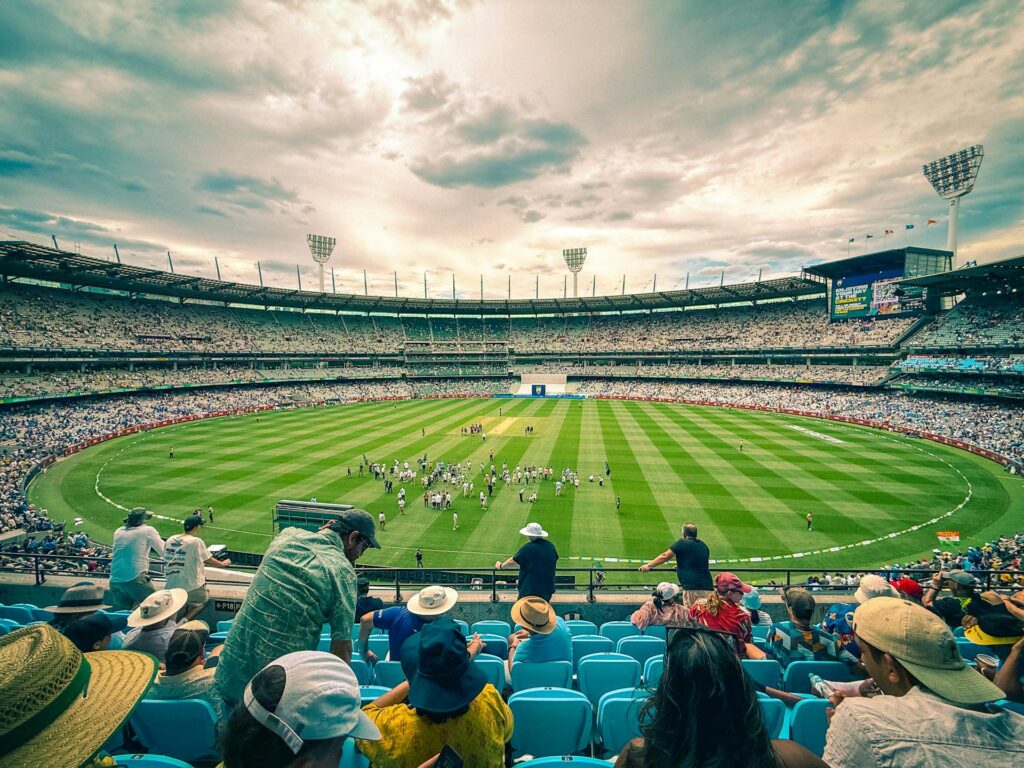
Sports Federations and Their Contribution to the Development of Local Competitions
Sports federations coordinate and facilitate national and local competitions and also help with the organization of these events. Sports federations provide systems and processes that ensure the fairness and transparency of leagues, tournaments, and other grassroots activities. Furthermore, systems and processes provided by sports federations help organize and improve accessibility for athletes, especially in remote areas, to participate in all recognized sports and sports activities.
The rational local competition system operates effectively. With the rational local competition system, sports federations are able to do more, including certifying referees and training coaches to ensure the existence of a rational competition system. This provides athletes with well-organized and rational competition systems, and also provides systems for their skill development.
Modern sports communities also follow competitions through digital platforms that combine match coverage with analytical discussions, where supporters examining league results, match statistics, and betting markets sometimes encounter references connected to (Arabic: تسجيل دخول ميلبيت) while reviewing sportsbook odds, evaluating team form, and comparing results from regional tournaments and international leagues.
Governance and Organization of Local Competitions
As non-profit organizations, sports federations serve as the governing authorities that preserve the integrity and framework of the individual competitions. They provide the rules and structure of the leagues, and enforce the guidelines for clubs in relation to the registration of players, the scheduling of matches, and the discipline of players.
In addition, federations manage the communication and transactions between the clubs, the referees, and the organizers of the tournament. The federations use their administrative authority to keep each tournament going and to resolve any disputes according to the rules. These administrative frameworks continue to protect equality and integrity within the local leagues.
Online communities frequently discuss federation-managed competitions through social platforms where supporters analyze match outcomes, examine statistics, and exchange betting insights on pages including MelBet Instagram Mauritania, where followers review competition updates, compare sportsbook odds, and discuss team performance trends during regional tournaments.
Apart from their organizational duties, federations keep the official history of each competition. The results of matches, the statistics of players, and the records of disciplinary actions are kept for each competition to ensure that transparency and consistency are maintained from season to season.
Development Programs for Local Athletes
Sports federations participate in promoting the enhancement of athletes beyond administrative responsibilities. Numerous entities develop training programs and youth academies aimed at recognizing young talent early and providing appropriate coaching opportunities. Such programs help athletes advance through the ranks of local, national, and international competitions.
Along with other stakeholders, educational bodies engage in the practice of promoting sports among students. At this point, organized sports and school leagues, as well as youth tournaments, help children discover the world of organized sports. These practices enhance the overall fitness of children, as well as develop the ability to work in a team, and foster a sense of competition.
As part of the overall development, federations organize training for coaches. For instance, in some federations, the criteria for obtaining a coaching certificate include the mastery of contemporary coaching, advanced tactical planning, and injury prevention. This is how federations elevate the quality of coaching to guarantee the development of athletes.
Access to community sports facilities created by federations in some countries is funded by the federations themselves. This is true for training field constructions, stadium maintenance, and equipment purchases for local competitions. This is how athletes obtain the ability to train in a safe, functional, and high-quality environment.
Infrastructure and Facility Development
Sports facilities are a fundamental part of the development of grassroots competitions. Federations usually work with the Government and the private sector to advance the development of stadiums, training, and sports centers. Newer construction gives athletes modern playing surfaces, fitness, and medical provision aids.
Better construction also brings improvements to the spectator experience. Well-designed and modernised stadiums increase community involvement and provide better environments for spectators to watch local competitions. Socially, this participation magnifies the value of local competitions.
Construction has also meant the building of multi-purpose sports complexes. These can cater for several sports, including football, track and field, and basketball. This helps to optimise construction and provide increased opportunities to more athletes.
Equally, preventative maintenance is an important element of sports. Federations give instructions for the maintenance of surfaces, sports field lighting, and maintenance to ensure spectator safety and to ensure competitions are conducted with minimal risks to participants.
Promotion and Media Coverage of Local Leagues
Through media partnerships and digital communication, sports federations promote local competitions. Regional tournaments receive higher visibility through broadcasting contracts with television networks or streaming services, giving exposure to local athletes.
Federations can utilize digital media to disseminate information on match schedules, results, and stats. Through official websites and mobile applications, fans receive real-time competition updates and match highlights.
Before delving deeper into promotional methods, it is beneficial to first look at the ways in which federations increase audience and community engagement.
Key promotional activities organized by sports federations include:
- Broadcast partnerships: Agreements with television networks or streaming services to showcase important matches.
- Digital communication: Official websites and social media channels sharing schedules, results, and tournament news.
- Community outreach programs: Public events and youth festivals encouraging participation in sports.
- Sponsorship coordination: Partnerships with businesses that support league operations and athlete development.
These initiatives ensure that local competitions receive the attention necessary to maintain strong participation and fan interest.
Regulatory Oversight and Fair Play
Sports federations make sure that all of the events they run are fair by overseeing several different aspects. In addition to ensuring that there is no discrimination against players regarding their participation based on their age, sex, religion, etc., (eligibility), and to ensure that there is no unfairness in terms of how discipline will be handed out to players who break the rules (discipline) and/or if they use performance enhancing substances (anti-doping); she is also responsible for enforcing these rules.
She has developed training programs to assure that matches are refereed according to the rules of the game.
Disciplinary committees oversee complaints, misconduct, and rule infractions. Disciplinary committees consider evidence, and review sanctions listed in match reports, prior to deciding if a sanction should be imposed. The disciplinary committee’s process allows the federation to maintain the credibility of their competitions and ensure that teams respect the fairness of the competitions.
Federations’ primary objective is to teach ethical conduct to athletes, coaches, and managers. There are many educational programs designed to teach participants to treat their opponents fairly, to follow the rules, and to demonstrate good sportsmanship.
Challenges Facing Sports Federations
The sport federations face numerous difficulties when addressing the importance of handling local competitions. Lack of finances may impede on the development of the necessary youth programs in the region or the construction of new infrastructure.
The administrative coordination is yet another challenge. Considerable time must be devoted to managing the communication and organization of numerous clubs as it may become very tedious and overwhelming. Such frameworks must be utilized by the federations.
Another factor to consider is the trust from the public and the stakeholders. Confidence from the stakeholders is earned when a federation exhibits a strong leadership in the absence of blame and poor decisions.
Finally, there is the need for federations to adapt to the latest technologies. There is a need for balance in adapting to contemporary technologies regarding communication, scheduling, and data management.