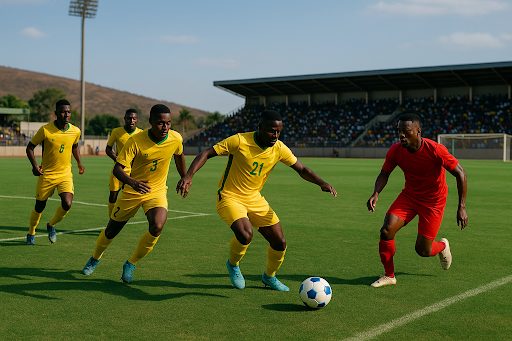
As the FIFA World Cup continues to expand and change, so too do the expectations surrounding African teams. The 2026 tournament marks a rather big milestone, with a record of ten African nations qualifying for the competition. That increased representation has naturally led fans and analysts to ask whether an African side can finally become a genuine title contender.
Early betting markets show an interesting look into how bookmakers and analysts view Africa’s team prospects. While the traditional powers of Europe and South America still dominate the outright winner odds, several African nations are attracting growing attention. The numbers suggest that Africa is no longer viewed as fun teams to watch with no stake in the game. Instead, there is a growing belief that the continent’s top teams can challenge right into the knockout stages.
Morocco Leads the Way
No African nation enters the tournament with higher expectations than the Moroccan national football team. Following their historic semi-final run at the 2022 World Cup, Morocco has become the benchmark for African success on the global stage. As such, early odds place Morocco as the favourite to finish as Africa’s best-performing team. Several bookmakers have listed them ahead of traditional continental rivals such as Senegal, Egypt, Algeria and Côte d’Ivoire. Some outright markets have given Morocco significantly shorter odds than any other African nation, reflecting confidence in both their recent achievements and the quality of their squad.
What makes Morocco particularly intriguing is that their success is no longer viewed as a one-off tournament run. The betting markets sees them as a genuinely established force capable of competing with top nations over multiple tournaments.
Senegal and the Chasing Pack
While Morocco leads the way in terms of odds, they are far from Africa’s only hope. Senegal remains highly respected by bookmakers and football analysts alike. Their blend of athleticism, tactical organisation and international experience makes them one of the continent’s most dangerous teams.
Behind Senegal sits a strong second tier that includes Egypt, Côte d’Ivoire and Algeria. These nations may not feature so heavily in the outright winner markets, but they are increasingly viewed as teams capable of advancing beyond the group stage and causing problems for more heavily favoured opponents.
For football fans who enjoy analysing tournament probabilities or looking for value opportunities to bet on football online, African teams are one of the most interesting regions to follow. The continent’s leading teams often receive less media attention than European teams, which can create discrepancies between public perception and actual competitive strength garnering some good odds for those on the lookout.
Why the Expanded Format Helps
The expanded 48-team format could also work strongly in Africa’s favour. Under the new structure, the top two teams from each group qualify automatically, while several third-placed teams also progress to the knockout rounds. This reduces the margin for error.
In previous tournaments, one poor result could end a team’s campaign before it truly began. Now, squads with depth, physical resilience and tactical flexibility have a greater opportunity to recover from setbacks and build momentum. Many analysts believe this structure benefits African teams, which have often been capable of matching stronger opponents over individual matches but struggled with consistency across an entire tournament.
The expanded field also increases the likelihood that multiple African teams reach the knockout rounds, potentially creating more favourable pathways into the later stages.
Cautious Optimism, Not Overconfidence
Despite the encouraging signals, the odds still highlight the gap between Africa’s best teams and the tournament favourites. Nations such as Spain, France, England, Brazil and Argentina continue to dominate the outright winner markets. Most African teams remain long shots when it comes to lifting the trophy itself.
However, betting markets are designed to reflect probability rather than possibility. Morocco’s semi-final appearance in 2022 demonstrated how quickly perceptions can change when a team combines talent, preparation and belief. With ten representatives at the tournament and several nations carrying genuine quality, Africa arguably enters this World Cup in its strongest position ever.
The early odds do not yet predict an African world champion. What they do suggest is that the continent is closer than it has ever been to producing one. For a region that has spent decades trying to get a foot in the door, this already represents significant progress.