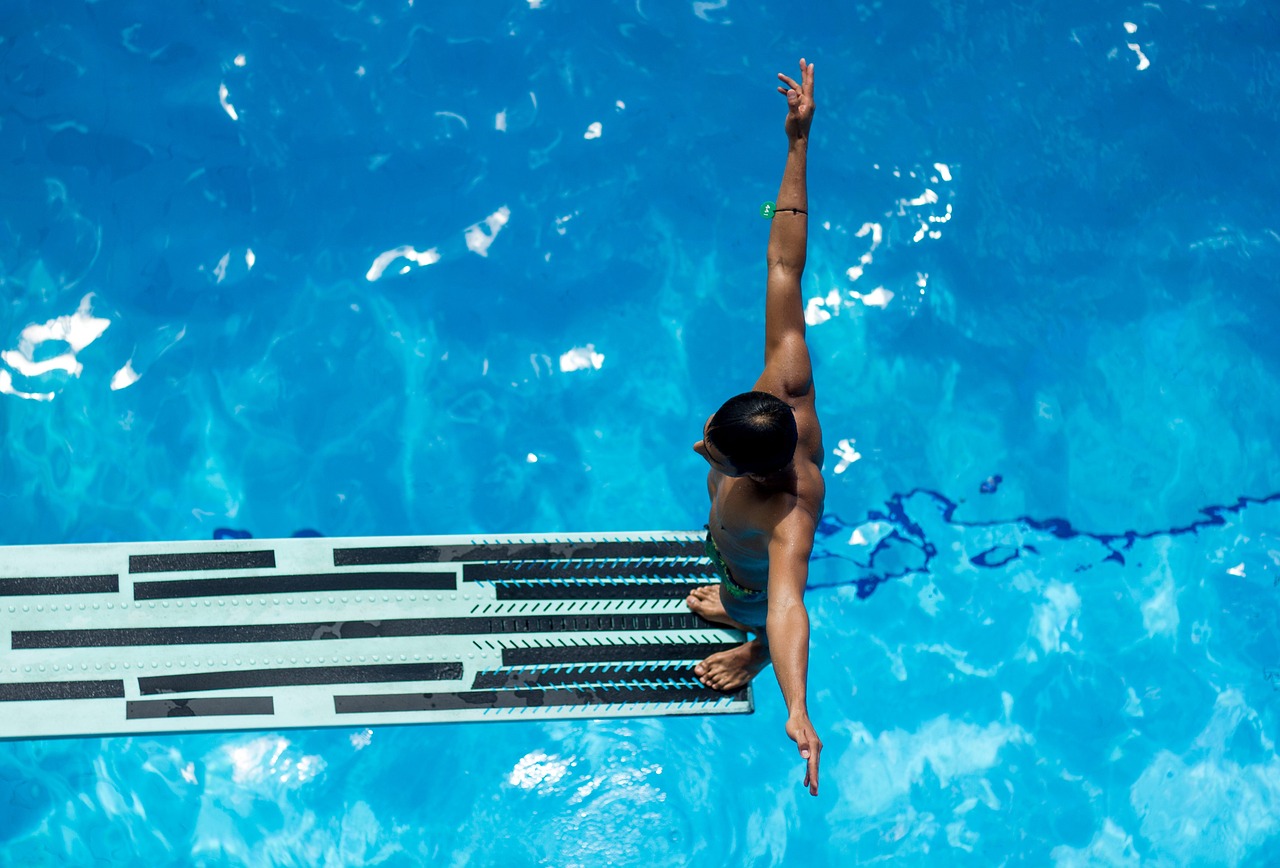
Elite athletes are not just superior to average people because they work harder, train smarter, or practice longer hours.
No…
Elite athletes obsess over the details. Everything that could possibly make them better, they are focused on.
And this brings me to the topic of this article…
The clothes they wear. What kind of gear an athlete selects can matter as much to them as the actual training.
Whether we are talking about a footballer deciding on their boots or a swimmer choosing a race suit, equipment matters.
Good equipment could save an athlete’s career. The right gear can make an athlete.
Let’s take a closer look at why:
- The obsession with performance and recovery
- Technical advancements in athletic wear
- Changes to competitive swimwear
- Selecting the right equipment for your goals
The Obsession With Performance and Recovery
Let’s take a moment to think about this…
In the swimming events at Paris 2024, 21 Olympic records were broken in the pool.
But it’s not just swimwear that’s changed. It’s all the technical details that go into making an athlete’s gear.
Professional athletes know that it’s not just a case of showing up and doing the work. To get the best out of yourself, you need to think about recovery and recovery time as well.
Compression wear can help improve circulation. Technical materials, swimwear and boardshorts collections provide benefits to professional athletes and anyone else who wants to look their best.
The reason gear obsession makes sense:
- Reduced drag and resistance – Performance fabrics reduce friction.
- Better temperature control – Advanced materials help the body to stay cool.
- Faster recovery – Compression technology aids in circulation.
- Confidence boost – Looking good actually helps you to perform better.
That last point is not fluff. Psychologists have a term for this. It’s called “enclothed cognition”.
The clothes you wear influence how you feel and think.
Athletes that know this also spend time on the mental side of competition. They work on their mental game.
Pretty amazing, right?
The Science Behind Performance Apparel
Performance athletic clothing is not just stitched together willy-nilly.
Scientists spend time and effort engineering fabrics that can perform under pressure. Testing new materials in wind tunnels and water flumes is standard practice.
Measurements include everything from moisture-wicking to aerodynamic drag coefficients.
The results are impressive…
Professional sportswear has been proven to lower skin surface temperature and reduce sweat rates for athletes. They have a direct impact on physiology during hard training.
But it doesn’t stop there. Compression clothing can aid blood circulation and muscle recovery. Studies have shown that compression garments in the lower body can improve performance by reducing heart rate.
Materials That Matter
Fabrics are not created equal. When elite athletes are choosing their gear, they are thinking about:
- Polyester blends – Moisture-wicking
- Nylon/Spandex – Durability and stretch
- Hydrodynamic materials – Low water resistance (swimmers)
- Antimicrobial treatment – Reduces odour and bacterial growth
Swimwear alone was valued at over $21 billion in 2024. There is no small investment into making it better.
Swimwear Technology Has Changed the Game
Swimming may be the best example of gear obsession yielding results.
Polyurethane suits were eventually banned due to the advantage they gave the wearer. But the race didn’t stop there…
Today’s competitive racing suits are made with innovative hydrodynamic designs. These reduce drag without being illegal. Muscle compression, targeted paneling, and specialist coatings aid swimmers in moving faster through the water.
The results are impressive. Records that had stood for decades are being beaten with regularity. The World Swimming Championships in Budapest in 2024 saw 30 World Records set. That is the highest number of World Records at a single short-course championship.
Features That Make Elite Swim Gear Different
Racing swimwear is not just tight regular swimwear. There is more engineering in a swimmer’s suit than you might think:
- Hydrophobic coating – Reduces water absorption.
- Compression zones – Provides support to key muscles.
- Bonded seams – Reduce drag from stitching.
- Strategic paneling – Helps to improve body position in the water.
It also trickles down from professional swimmers to the public at large. Any recreational swimmer can take advantage of the gear being designed for athletes.
The Psychology of Looking the Part
Let me tell you something that most people don’t think about…
Athletic clothing has a significant impact on both your physical and psychological state.
Studies have shown that wearing high-quality athletic gear that is associated with competence can actually help to boost self-confidence.
If you feel the part, you act the part. Wearing the right kit also helps to form your identity. Your identity helps to form your behaviour.
Teams have been aware of this for centuries. Uniforms are not just for easy identification. Matching clothing builds trust between people and a sense of camaraderie.
The visual consistency makes everyone feel like they are part of something bigger than themselves.
There is also an intimidation factor as well. If you walk into a gym, look fit, and dress well, people see that and subconsciously respect it.
The clothes you wear are important. But there is a science to the psychology of sportswear, as well.
Selecting the Right Gear for Your Goals
Not all of us are training for the Olympics, but all of us can make more considered decisions when it comes to the gear we use.
For swimmers and water sports athletes, there are a few things to keep in mind:
- Chlorine resistance – Fabrics that maintain their shape.
- Compression – Muscle support.
- Reduced drag – Fit without restriction of movement.
- Quality – Gear that lasts.
For general fitness and training, there are similar factors that help with choosing the right gear:
- Moisture-wicking materials.
- Compression vs. comfort.
- Activity specific.
- Quality that you can get into regularly.
The best gear is the gear that gets worn. If you have something that fits well, does its job, and makes you feel good, then that will always be better than more expensive equipment that stays in your drawer.
Don’t overthink it. Start small, learn as you go. Quality trumps quantity when it comes to building a wardrobe.
Bringing It All Together
Elite athletes are obsessed with their gear because the details make a big difference.
Advances in technology in athletic wear have transformed the way in which sport is played.
The performance of athletes at the top of the pyramid is better in every sport. From the pitch to the pool. From the training ground to competition. The gear you use can give you a measurable advantage.
Machine learning models are trained on elite athlete data and can reach surprising levels of precision in prescribing an optimal training load. The same models can also be used to predict the best gear selection.
And that is the key here.
If it works for them, it works for me.
Any of us can benefit from making more considered decisions about what we wear when we exercise.
Performance fabrics. Good fit. Purpose-built design. These are not just for professional athletes.
The swimwear market is booming, and the sports apparel market is also growing. The reason is simple.
The world is realising that better gear leads to better performance. Better performance leads to better results.
It is true whether you are training for the Olympics, or you are just trying to stay active.
Choose your equipment wisely. It will make a difference.