Technical Infrastructure and Data Trajectories in Live Table Streaming
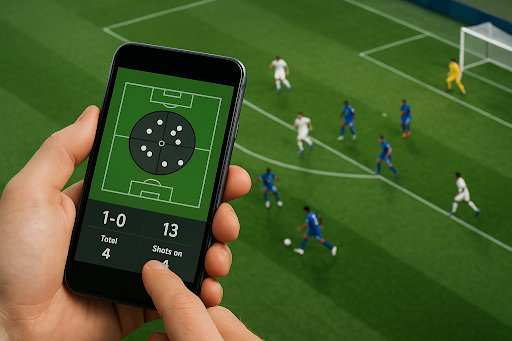
Traditional desktop entertainment systems frequently required multi-stage authentication procedures during the initial platform authorization phase. Handheld devices change this dynamic by offering direct system access. Users open a standard mobile browser or a native application, complete the mandatory ثبت نام در سایت onja bet sequence in under three minutes, and set up biometric face identification. From there, they connect directly to live-streamed table segments over stable 5G networks. Moving from stationary computer systems to portable devices creates new infrastructure demands for network engineers who look at data transmission stability on the move.
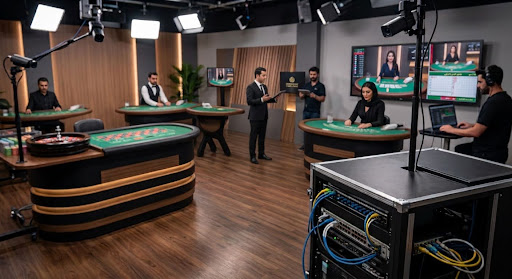
Broadcast architectures deploy substantial server resources to maintain frame synchronization across international data networks. When a croupier handles physical assets inside a secure broadcast studio, recipient hardware must process that incoming visual transmission immediately to prevent packet loss. This research paper evaluates how visual scanning software interprets real-time table metrics, monitors network latency thresholds, and determines the precise impact of high-definition video feeds on personal cellular bandwidth caps.
Optical Recognition and Real-Time Interface Synchronization
The immediate delivery of physical card data to a remote user interface relies on Optical Character Recognition software. Overhead high-definition cameras capture the exact coordinates of the physical table layout continuously. According to a 2026 data infrastructure report by the Gaming Laboratories International (GLI) research division, modern camera setups process visual distributions using automated optical character recognition pipelines.
The scanning system interprets the values of the physical cards during the dealing phase. The server then cross-references this visual data with the corresponding interface code on the smartphone display. This operational sequence manages multiple infrastructure tasks simultaneously:
- The visual capture hardware translates physical object placement into digital database entries within several milliseconds.
- Automated server scripts update session histories and settle secondary wagers before the croupier completes the active dealing phase.
- Micro-sensors integrated into the roulette wheel tracking mechanism register final coordinate values to verify win metrics immediately.
Continuous server communication remains mandatory throughout the session. If the transmission lag between the broadcast hardware and the user interface drops below standard synchronization thresholds, the software halts the active session to protect the financial accuracy of the table metrics.
Cellular Bandwidth Limits and Video Feed Volume
Processing high-definition video feeds over cellular connections changes data consumption numbers fast. A live streaming session requires constant two-way data packet transmission. This setup generates a much heavier network load than standard, pre-recorded media playbacks. A comprehensive mobile network study conducted by Ericsson in June 2026 demonstrates that high-definition video rendering over cellular bands requires up to a 35% higher throughput margin compared to standard static text rendering platforms.
An active table session demands concentrated bandwidth allocation because the recipient device processes multi-angle video downloads while uploading user input metrics. Hourly consumption data varies based on the specific architectural complexity of the stream:
- Standard resolution roulette segments utilize approximately 150 megabytes per hour due to fixed camera positioning.
- High-definition baccarat broadcasts deploy multiple capture angles, raising data consumption to nearly 300 megabytes per hour.
- Premium interactive game shows featuring moving studio components and active database chats demand 400 megabytes hourly.
These consumption rates require systematic tracking of local network coverage routes. If a cellular provider throttles connection speeds due to data cap violations during an active session, the sudden bandwidth drop can force an automatic settlement before a user can submit an updated tactical strategy.
Network Settings and Real-Time Performance Metrics
Real-world testing shows how connection profiles handle live table streams. Under a high-frequency 5G setup, connection latency drops below 20 milliseconds, which keeps table interfaces and wheel rotations perfectly synchronized. Older data lines often see latency values exceed 80 milliseconds. That delay causes measurable frame drops and bad audio lag. Hourly traffic volume follows the same pattern. A stable, high-bandwidth connection lets the hardware process 400 megabytes of multi-angle visual data without thermal throttling issues. Older lines encounter strict bandwidth caps that restrict the incoming feed, forcing the platform software to lower video presentation quality to pixelated resolutions. This transmission lag impacts interface responsiveness. Fast button inputs register on the studio server within a small fraction of a frame on updated networks, whereas delayed connections cause the platform architecture to reject late stakes at the exact moment the dealer signals the end of the round.
Practical Configuration Adjustments for Mobile Hardware Maintenance
Analytical reports frequently attribute drops in software performance to minor platform glitches on the application server. However, an inspection of device settings often reveals poor local operating system maintenance. A smartphone burdened by excessive background processes cannot interpret high-definition stream frames efficiently. Technical documentation published by Qualcomm Technologies indicates that hardware decoding assets operate at reduced thermal parameters when system backgrounds remain unburdened by active background applications.
Hardware optimization requires systematic attention during active tournament schedules. Users must keep their devices configured properly to handle the processing demands of high-volume video cards.
The technical evaluation indicates that high-definition streams display mathematical probabilities rather than guaranteed outcomes on the table layout. Keeping personal cognitive biases separate from data analysis is a standard rule. Checking how a smartphone handles heavy data traffic before entering a long session is simply a smart precautionary step. Entering a high-stakes table without verifying active data limits or connection stability frequently leads to sudden drops right in the middle of active rounds.