You ever stood in a casino at 3 a.m., mildly caffeinated, suspiciously hopeful, and just… listened? I did. It wasn’t the clinking of coins or the hum of old ladies breathing superstition into their lucky charms that got me. It was the sound. Not the music. The sound.
The background buzz that neither annoyed nor comforted, but kept you right there — stuck in your seat like a bee in honey, only more willing. This isn’t coincidence. It’s science. Psychology. Acoustic warfare dressed up in neon.
Bitz crypto casino online uses audio cues so precisely tuned, you’ll swear the machines are flirting. You didn’t lose your paycheck. It was composed out of you in E major.
Let’s break this symphony down, one calculated note at a time.
Audio as Behavioral Engineering
Let’s dispel a myth right here: the sounds in casinos aren’t random. You think that cha-ching from the penny slot next to you is just someone’s lucky moment? It’s not. It’s part of a performance designed to convince you that luck is contagious.
Casinos hire sound designers. Like, actual ones. The same folks who score movies and video games. Their job? To make losing sound like almost winning, and winning sound like a firework finale at Disneyland with a free hot dog.
Here’s a glimpse at what they tweak — and how deep this rabbit hole goes:
| Sound Element | Purpose | What They Actually Do | Scientific Backing |
| Slot machine chimes | Trigger dopamine release, create illusion of frequent reward | Tuned to high-frequency tones (~1000-3000 Hz) to mimic happy human vocal cues | Dixon et al. (2014), University of Waterloo |
| Background ambience | Hides silence (which would signal losing), maintains sensory engagement | Loops of gentle crowd murmurs, muffled wins, and low rhythmic pulses that mask player solitude | Griffiths & Parke (2005), Nottingham Trent University |
| Near-miss sound effects | Makes you feel like you’re so close, encouraging further play | Uses minor-key tension notes resolving upward — psychologically linked to anticipation and “almost” events | Clark et al. (2009), University of Cambridge |
| Layered “crowd wins” | Artificial applause to imply frequent big wins nearby | Synthesized overlapping sounds played at intervals even when no real win occurs | LaPlante et al. (2012), Harvard Medical School |
| Tempo acceleration | Builds suspense and speeds up player decision-making | Beats increase as player nears bonus rounds or jackpots to induce urgency | Weatherly & Brandt (2004), University of North Dakota |
| Loss-masking fade-outs | Prevent discouragement after a loss | Sounds gently fade or are absent altogether after a losing spin — creating no “punishment” signal | Dixon et al. (2010), Gambling Research Lab |
Next time you hear a winner! nearby, ask yourself: did they win… or did you just hear them win? Because the real jackpot isn’t the payout — it’s your attention. Your continued play. Audio is the bait. You’re the fish. And the hook? It sings.
How Sound Replaces Real Money
There’s a reason old-school coin clinks are still simulated digitally — they tap into nostalgia, reward memory, and, most importantly, they hide your losses.
Back when coins hit the tray, you knew what you were winning. Now? You tap a card, and a machine chirps happily while your balance quietly shrinks. Sound has replaced physical money. It’s the new currency — one that feels good even when the numbers don’t.
Let’s decode the soundscape:
| Sound | Emotion Triggered | Casino Application | Psychological Trick |
| Thud | Disappointment, finality | Avoided in machine design | Reminds players of failure — disrupts flow |
| Plink-plink-plink | Anticipation, buildup | Simulates coin payout or bonus accumulation | Activates reward memory linked to physical cash |
| Ding | Satisfaction, reinforcement | Plays after small wins or button presses | Operant conditioning — keeps players engaged |
| Fanfare | Triumph, excitement | Triggers on jackpots or even minor milestones | Exaggerates value of wins |
| Silence | Emotional absence | Follows losses | Subtle punishment — makes players crave the return of “happy noise” |
A 2010 study from the University of Waterloo found that players exposed to sound-enhanced machines overestimated their win frequency — especially when machines used losses disguised as wins (LDWs). That is, losing money while still hearing celebration sounds. (Dixon et al., 2010)
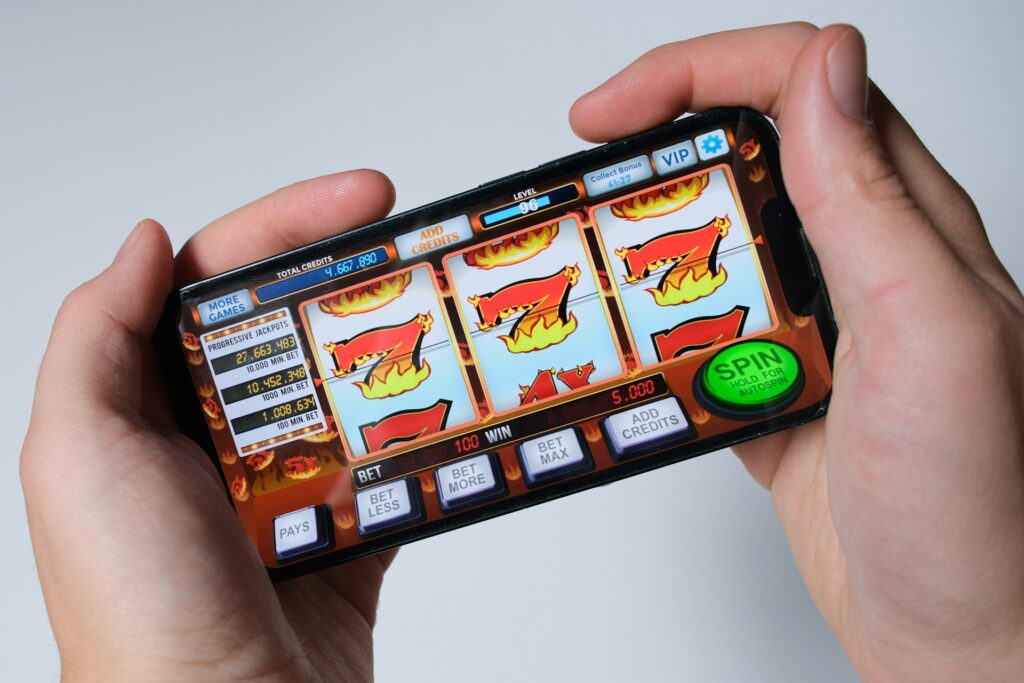
Want a real-world example? Fire up “777 Fire Frenzy” at Bitzcasino. Even a 10-cent win after betting 25 cents is met with fanfare. Lights flash, coins jingle — your brain celebrates, even if your wallet weeps.
The trick isn’t in the money. It’s in the noise. Or rather, in the lack of it when you lose. Because silence in a casino doesn’t say, “You’re done.” It whispers, “Try again — the music’s about to start.”
Tempo, Frequency, Addiction: The Vegas Metronome
Think of a casino as a giant, glittery organism. It breathes, pulses, and sings — always in time. That rhythm is designed to match and manipulate yours.
Faster beats = faster decisions. Slower sounds = lull you into comfort. This is behavioral entrainment, and you’re dancing even if you didn’t bring your shoes.
| Audio Tempo (BPM) | Psychological Effect | Casino Use Case |
| 60–70 bpm | Calm, focused, decision clarity | Poker rooms, high-stakes areas |
| 80–100 bpm | Engagement, alertness | Slot machine areas |
| 110–130 bpm | Excitement, impulsivity, quicker actions | Flashy bonus rounds, game transitions |
| 140+ bpm | Overstimulation, anxiety | Rarely used — too chaotic for retention |
Designers balance these soundtracks like Michelin-star chefs layering salt and umami. Too much, and the player gets overwhelmed. Too little, and they get bored. The sweet spot? Somewhere between “this is fun” and “I forgot what time it is.”
Echo of Losing: Why You Keep Playing Anyway
Here’s the magic: your brain doesn’t need to win — it just needs to feel like it almost did. And casino audio makes that feeling sing.
- Near-misses? They come with uplifting jingles. You didn’t lose — you almost triumphed.
- Losses? No harsh buzzers, no drama. Just a soft reset and an open door.
- Ambient music? Loops endlessly, always hinting at a climax. It keeps you suspended in possibility
This emotional sleight of hand reshapes your experience:
| Event | Actual Outcome | Emotional Response (Thanks to Sound) |
| Win | Positive | Amplified with fanfare — you feel like royalty |
| Loss | Negative | Softened — it’s just a pause, not a stop |
| Near-miss | Still a loss | Feels like progress — you’re getting closer |
| Time spent | Hours passed | Feels immersive, thanks to engaging, continuous audio |
In the end, sound doesn’t remind you of what you’ve lost — it keeps you tuned in to what might happen next. It’s not just noise. It’s momentum. And it’s beautifully done.
Conclusion
Walk into a casino, and you’re not playing the odds — you’re playing your own brain. The soundtrack? Designed to keep you spinning. It doesn’t celebrate your win — it seduces you to stay. Not cruelly. Just cleverly. You’re not the player. You’re the instrument. And it’s all in tune.